





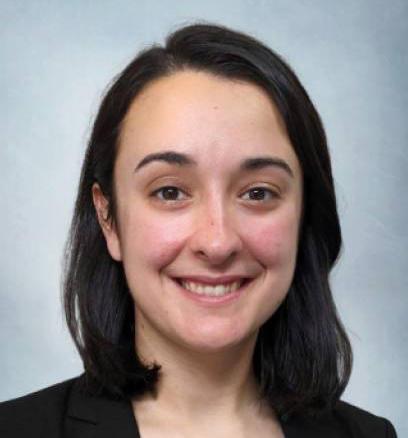
 Dr. McArthur’s research focuses on making genomic medicine accessible, equitable, and clinically beneficial for adult patients. When many people think about genetics, they often think of pediatrics, but children with genetic conditions become adults, and many adults have unrecognized genetic contributions to their medical history.
Adult genetics can be especially complex because genetic risk interacts with age and environment.
During residency, she has worked on projects spanning neurogenetics, hereditary cancer, cardiovascular genetics, and critical care genomics. One project newly characterized a recurrent genomic deletion involving VHL, a hereditary cancer predisposition gene, and SLC6A1, a gene associated with developmental delay and epilepsy.
The first two patients with VHL-SLC6A1 deletion syndrome identified at UW were adults with lifelong developmental delay who had never received genetic testing. They were only diagnosed after developing CNS tumors that caused severe neurologic complications. Genetic testing revealed deletions that included both VHL, explaining their tumor risk, and SLC6A1, explaining their developmental delay and epilepsy.
"We characterized a cohort of six individuals across the US and Netherlands with overlapping deletions and showed that repetitive DNA elements, called Alu elements mediate this recurrent deletion," said McArthur.
This project highlights that earlier genetic diagnosis could have prompted tumor surveillance, potentially identifying tumors before they caused life-changing complications. It could also have informed epilepsy treatment, since SLC6A1-related disorders have known biological mechanisms that may support more targeted therapy.
This project reinforces the importance of educating adult clinicians to recognize when genetics may be relevant, while also developing tools to identify patients at risk and incorporate genetics more routinely into adult medical care.
It also illustrates the value of connecting mechanistic genetic knowledge across siloed subspecialty care, where insights from one field can inform diagnosis and treatment in another.
McArthur has recently begun work on a new clinical trial—UW ISeqU—which will be the first prospective rapid whole genome sequencing study in adult ICUs. This project has begun enrolling patients admitted to medical and cardiac ICUs at UW Montlake and Harborview and will complete rapid clinical-grade whole genome sequencing for patient presentations not clearly explained by trauma, intoxication, or expected infection-related diseases. Through this study, she hopes to generate evidence for when and how genome sequencing can improve adult critical care.
I am grateful to Dr. Fuki Hisama, Dr. Gail Jarvik, and Dr. Ken Steinberg for facilitating the creation of the combined Internal Medicine/Medical Genetics residency pathway; to Dr. Wendy Raskind, Dr. Danny Miller, and Dr. Yonatan Buber for their mentorship; and to Ruby Lamb, CGC, for her instrumental help with the implementation of UW ISeqU. I would also like to thank Dr. Kathy Leppig and Dr. Michael Lenaeus for their continued advocacy of my training and scholarship.
McArthur is in her last year of genetics training at UW and Seattle Children’s Hospital, and her goal is to stay in academic medicine as an adult general clinical geneticist. She hope to care for adults with inherited disorders across the full spectrum of medicine.